
Does Listening Count as Reading? Here's What the Research Actually Says
The Signal - Issue 3

Welcome to The Signal! Each issue has three parts: something small from my own life that made me feel more connected to the world around me, something from the research that I think you actually need to know, and something I’d encourage you to talk about with your kid this week. My hope is that through these shorter newsletters, you’ll be inspired to connect with your kids about technology and with your family, community, and self.

A Point of Connection
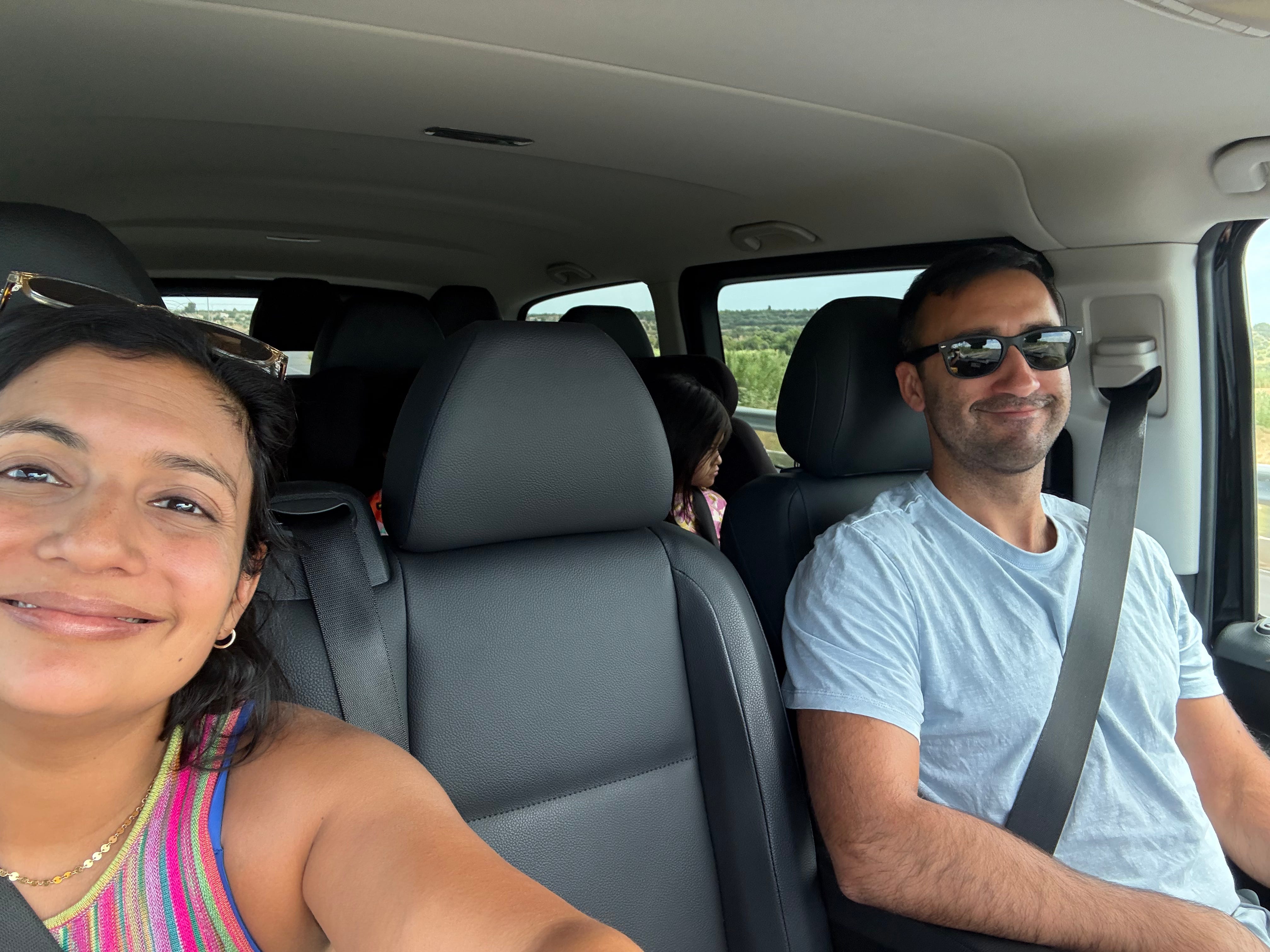
Last month, my extended family went on a two-week trip to Sicily to celebrate my dad’s 75th birthday. We had been planning the trip for over a year. It was incredible. The sites were beautiful, the food was delicious, and the weather was perfect (we got back before the big heat wave, thankfully). However, the best part of the trip wasn’t actually anything about Sicily itself; it was two weeks of uninterrupted time together.
Several years ago, blogger Tim Urban wrote a post that illustrated a sobering fact: by age 18, we’ve already spent 90% of the time we’ll ever spend with our parents. This is especially true if you don’t live in the same city as your parents.
I spent many of my early adult years living across the country from my parents. Now, thankfully, we live only a few miles apart, and we see each other often. But, I still think about that sobering fact often and feel guilty about how divided my attention is when I spend time with them. Generally, one of my kids is on top of me and the other is in close proximity saying, “mom, mom, mom!” Having a back-and-forth conversation feels nearly impossible.
Spending the two weeks together in Sicily provided enough time that at least a few of those deeper conversations were possible with each family member. And at this point, that feels like a win.

From the Research
In Sicily, we spent a lot of time driving between little towns in two enormous vans. My husband and I usually ended up with all five kids (spanning ages 3-12) in ours, which meant we listened to a lot of kids podcasts. A few actually held all five of them rapt: Magical Storybook, Story Shed, Circle Round, and But Why? It got me wondering how audiobooks and podcasts actually stack up against reading.
Pretty well, it turns out. A UC Berkeley study mapped how the brain represents meaning and found the maps for reading and listening to the same story were nearly identical. As lead researcher Fatma Deniz put it, whether people are absorbing audiobooks, podcasts, or print, “they are processing semantic information similarly.” A 2022 meta-analysis of 46 studies and nearly 4,700 participants backs this up: there was no reliable overall difference in comprehension between reading and listening, with reading only pulling ahead slightly for inferencing. The exception, though, is little kids. A Cincinnati Children’s study found audio-only stories ran “too cold” for preschoolers’ brains compared to an illustrated book read aloud, which struck the “just right” balance. So the podcasts probably weren’t quite the same experience for my 3-year-old as a book on a lap. But it’s nowhere near “not really reading,” either. As always, it’s somewhere in between.
A Conversation to Have
Young Kids (6-10): Ask: “What’s your favorite podcast or audiobook right now? What makes it as good as a book?”
Tweens (11–13): Ask: “Do you think your brain works the same way whether you're reading a book or listening to one? What do you think scientists found?”
Teens (14–17): Ask: “You know how people act like listening to an audiobook doesn’t ‘count’ the same as reading? Turns out the science says otherwise: the brain processes it almost identically. Does that match how it feels for you?”
Your turn - do you feel like you absorb information as well when you listen instead of read?
And remember, if you’re looking for a way to prepare your tween for a tech-saturated world in a connected and proactive way, check out my course: Tech Ready. It’s there for you whenever you are ready.