
Parenting in Tech: 2025 Wrapped
The 2025 highlights you need to know about tech + parenting

Happy new year! Now that we are fully back in the swing of things, it is a good time to do a wrap-up of everything that happened in the wild world of parenting + technology in 2025. In my world, I noticed many more conversations on soccer sidelines and at school drop-off about boundaries around technology. I heard parents chatting about the “return to the 90’s childhood” and getting their kids Tin Can phones for the holidays. In my clinical work, I continued to hear about the struggles teens face navigating online spaces.
If there’s one thing 2025 made clear, it’s this: parenting around technology is no longer just a personal decision. It’s a policy conversation. A school issue. A commuity issue. A philosophical debate. A global experiment unfolding in real time.
This was the year governments got involved, schools drew firmer lines, kids adopted AI faster than most adults expected, and—quietly—some genuinely good things happened too.
Here’s what parents should know about what changed in 2025, why it matters, and what we have to look forward to in 2026.
Australia Did the Thing Everyone’s Been Arguing About
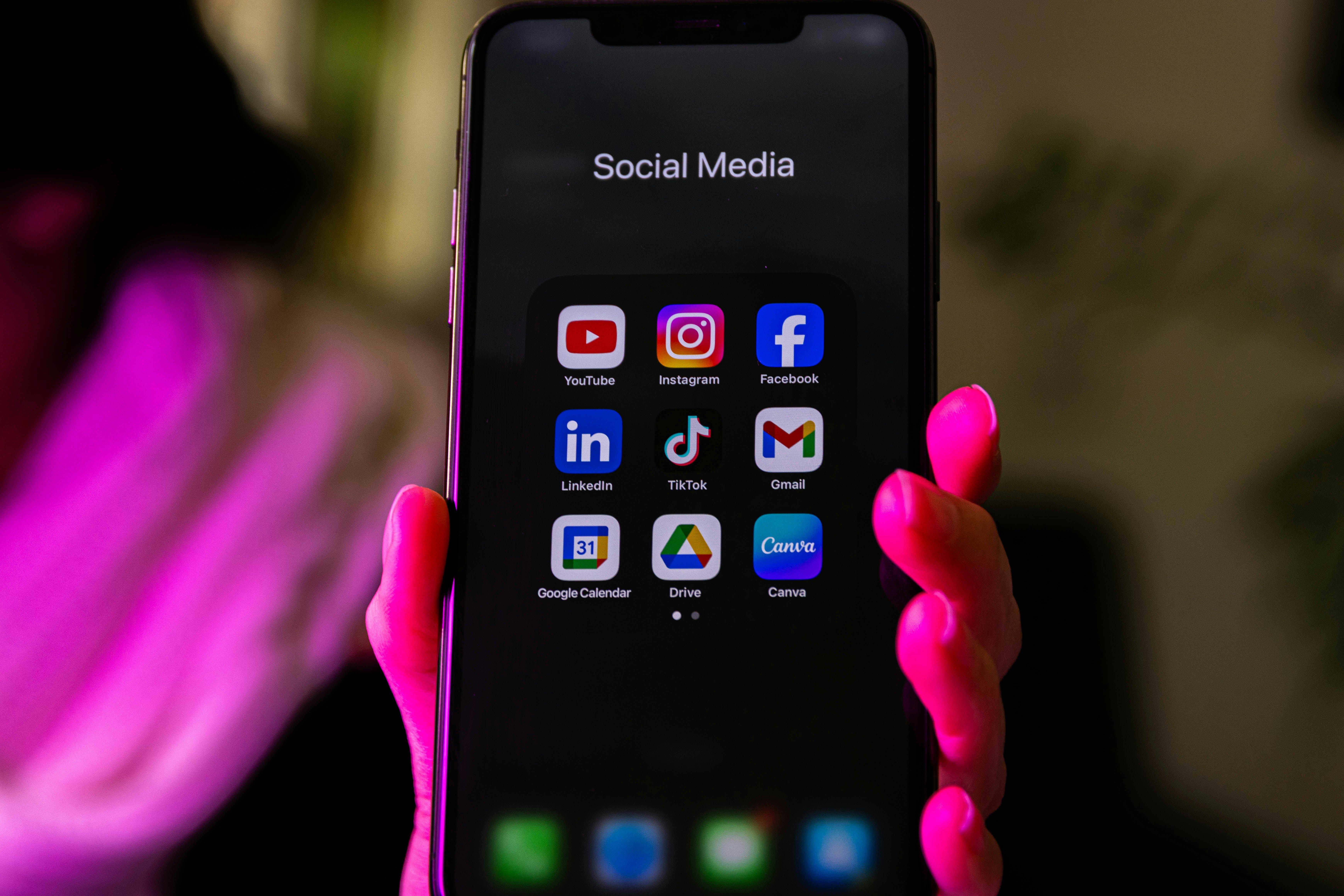
In December 2025, Australia became the first country to implement a nationwide ban on social media accounts for kids under 16.
Not a warning label.
Not a “use responsibly” nudge.
A total ban.
Major platforms are now required to verify users’ ages, and the responsibility sits squarely with the companies—not families—to enforce it. If they don’t, they face serious fines.
For parents everywhere else, this landed like a collective wait… they actually did that?
Reactions were mixed. Some parents felt relieved. Others worried about enforcement, privacy, and whether bans simply drive behavior underground. And many had the same quiet thought: If one country can do this, others might follow.
Whether Australia’s approach ultimately works or not, 2025 will be remembered as the year that social media stopped being treated as a neutral tool and started being regulated more like something that meaningfully affects children’s health.
All eyes will be on Australia in 2026. They are taking charge and we’ll all be watching to see if it might be us next.
Meanwhile, U.S. Schools Started Taking Phones Seriously
While Australia tackled social media head-on, American schools focused on the device itself.
In 2025, school cellphone bans expanded rapidly across the U.S. Districts and states that once hesitated moved toward “bell-to-bell” restrictions: no phones during instructional time, sometimes not at all.
States like New Jersey and New York passed a statewide policy. Other states followed with district-level mandates. Even schools that didn’t ban phones outright tightened rules dramatically.
Educators pointed to growing evidence that phones fragment focus, disrupt learning, and interfere with social connection during the school day. Parents—many of whom privately wished someone else would be the bad guy—often supported the changes. Parents who didn’t support the changes often cited student safety as their primary concern (another issue altogether).
What’s notable is the cultural shift. For years, phones in school were framed as inevitable. In 2025, they became negotiable again.
For parents, this was a subtle but important validation: it’s okay to say not yet, not here, or not all the time.
AI Moved From “Future Skill” to Everyday Reality for Kids
In 2025, AI use among children and teens surged—fast. Not just for homework help, but for brainstorming, storytelling, coding, studying, and, in some cases, companionship.
Teens reported using chatbots regularly. Teachers increasingly integrated AI tools into classrooms. Even younger kids encountered AI through educational platforms and games.
This shift made a lot of parents uneasy, and for good reason. AI raises real questions about critical thinking, dependency, privacy, and emotional development.
But here’s the nuance 2025 forced us to reckon with: AI isn’t just another app. It’s a new layer of interaction that’s embedded into almost everything we do online.
The question for parents isn’t “Should my child ever use AI?”
It’s “What skills do I want my child to build around AI?”
Discernment.
Ethical reasoning.
Knowing when to ask for help—and when to struggle through something themselves.
In 2025, AI stopped being optional to understand. In 2026, AI literacy will matter as much as digital literacy ever did.
Some Good News
2025 wasn’t just a parade of bans and concerns. There were bright spots as well.
Tech companies—under mounting pressure—rolled out more meaningful parental controls, including better oversight of teen accounts and AI interactions.
Educational platforms leaned into AI literacy (like Common Sense Media), not just AI use, helping kids understand how these systems work rather than treating them like magic boxes.
Even the toy and play space responded. We saw renewed investment in tech-adjacent tools designed to pull kids away from screens and back into physical, imaginative play.
And perhaps most encouraging of all: parent-led movements gained traction. More families talked openly about delaying smartphones, setting shared boundaries, and choosing tech intentionally instead of reactively.
No single trend fixed everything. But taken together, they suggested something important: We’re no longer pretending tech is neutral. We’re starting to ask how it shapes childhood—and what we want childhood to look like. We’re talking to other parents and thinking meaningfully about the world we want our children to inhabit.
What This Means Heading Into 2026
If 2025 was the year of big shifts, 2026 will be the year of integration.
Parents will be asked to:
Navigate AI without panic or blind enthusiasm
Collaborate with schools around device boundaries
Model intentional tech use themselves (yes, that part is still annoying)
Focus less on screen quantity and more on context, content, and connection
It’s alignment—between our values, our boundaries, and the tools our kids are growing up with.
A Final Thought
Parenting in the digital age can feel like a constant game of catch-up. But 2025 showed us something quietly reassuring: adults are starting to reclaim some authority in this space.
Governments acted. Schools drew lines. Parents organized. Conversations matured.
Technology will keep changing. That part is inevitable.
But how we respond to it—thoughtfully, collectively, and with our kids’ development in mind—that part is still very much in our control.
How did your parenting around tech change in 2025? Leave a comment and let me know!