
The Signal - Issue 2
On birthdays, spas, and reading on paper versus on screen

Welcome to The Signal! Each issue has three parts: something small from my own life that made me feel more connected to the world around me, something from the research that I think you actually need to know, and something I’d encourage you to talk about with your kid this week. My hope is that through these shorter newsletters, you’ll be inspired to connect with your kids about technology and with your family, community, and self.
School’s out for the summer! May always feels like a marathon and a sprint all at once. But, we made it.

A Point of Connection
My family has two clusters of birthdays — one in May and June, one in December and January. We just finished the spring round: my mom, my sister, my dad, all in quick succession, right in the middle of end-of-school chaos.
I love birthdays. Obviously there’s cake. But what I love more is that they’re one of the few moments that actually make us stop and think about a specific person: who they are, what they mean to us, why we’re lucky to have them. We don’t do that enough. Life moves fast and the people closest to us often get the least of our deliberate attention, precisely because we assume they’ll always be there.
We don’t have elaborate birthday traditions in my family. For big birthdays, sometimes we go on a trip together. Sometimes we go out to dinner, sometimes we make a special meal at home. There’s always cake. No matter the celebration - the togetherness is what matters most.

From the Research
Speaking of birthdays, my sister and I went to a fancy spa in Palo Alto for her birthday last weekend. It was so relaxing I literally fell asleep during my pedicure. As we settled into the lounge, I noticed something: nearly everyone around us was reading — and every single one of them was reading on paper. No Kindles, no iPads.
There’s an unstated norm in Silicon Valley. The people building the tech often don’t use it, or let their kids use it. Sitting in that lounge, surrounded by people who probably help shape the products the rest of us scroll through all day, it felt like a quiet but pointed reminder of something.
We’ve handed our kids devices and e-readers partly because we thought reading is reading. But the research says otherwise. A meta-analysis of over 171,000 participants found that people consistently comprehend more when they read on paper, a gap that’s especially pronounced for informational texts and anything time-pressured. Neuroimaging studies back this up: children’s brains are more cognitively engaged with print, and kids who read more books show stronger neural connections in language and cognitive control.
Reading researcher Maryanne Wolf calls what gets lost on screens “deep reading“ — the slower cognitive work of inference, reflection, and empathy that builds critical thinking. Skimming, which screens encourage almost by design, short-circuits it. A 2025 review in the Journal of Pediatrics puts it plainly: this is an unresolved conflict in how children learn, and we don’t have it figured out yet.
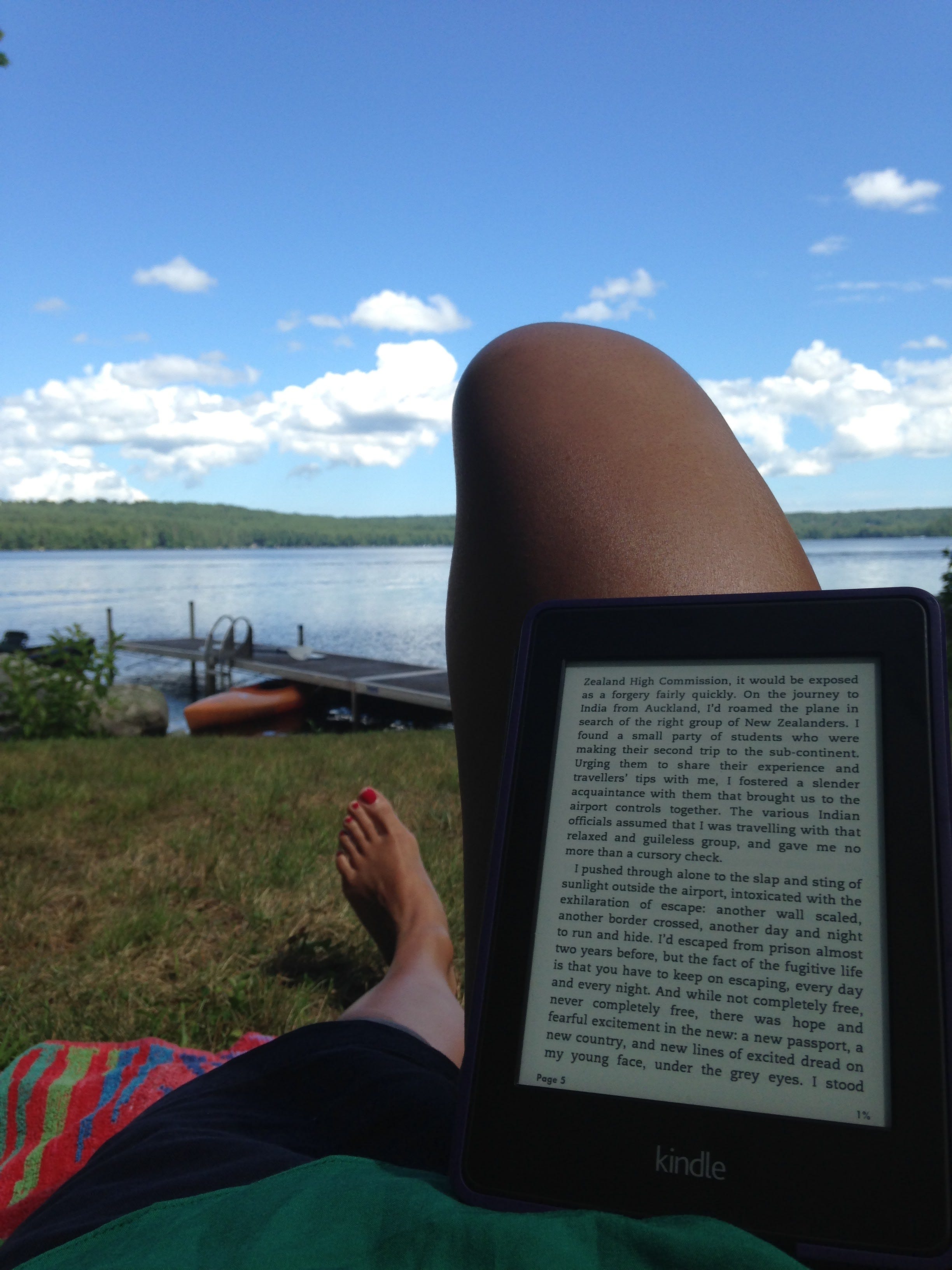
And this extends to us, too. The same screen inferiority effect shows up in adults. We tend to skim more, retain less, and walk away with only the gist. The exception, interestingly, is fiction: when you’re absorbed in a narrative, the medium matters less. So my Kindle habit isn’t without justification. I read on Kindle because it’s convenient: I can have multiple books going at once, it’s light, and most importantly, I don’t wake up my husband when I’m reading late at night. I’m not giving that up. But I’m also more aware now of what I might be trading off when the material actually matters.
The real nuance for our kids: a child who will read on a screen but won’t touch a book is still reading, and that counts for a lot. Screen reading can be a bridge, especially for reluctant readers. The research just suggests we keep print in the picture too, particularly while kids are still learning to read and building those early habits.
A Conversation to Have
Young Kids (6-10): Ask: “When you read a real book, how does it feel different from reading on a tablet? Which one do you like better?”
Keep it light and curious — you’re just opening the door. If they say they like screens better, follow up with: “I wonder why that is. Do you think your brain works differently?” You’re planting the seed that how we read is something worth noticing.
Tweens (11–13): Ask: “Did you know that scientists have studied whether your brain reads differently on paper versus a screen? What do you think they found?”
Let them guess before you share anything. Tweens respond well to being treated like they can handle real information — and being asked to think before being told. Then share the gist: paper tends to help us understand and remember more, especially for school stuff. Ask: “Does that change how you want to do your reading for school?”
Teens (14–17): Share the tension honestly: “I read on my Kindle because it’s convenient, but I also learned that screens might be making it harder to really absorb what I’m reading. I’m kind of conflicted about it. Do you ever think about that?”
Teens are more likely to engage when you lead with your own ambivalence rather than a finding you want them to take away. From there you can get into the research together - the deep reading piece, the skimming habit, what it might mean for how they study. The goal is a real conversation, not a lesson.
Your turn - do you prefer reading on paper or on an e-reading device? Why?
And remember, if you’re looking for a way to prepare your tween for a tech-saturated world in a connected and proactive way, check out my course: Tech Ready. It’s there for you whenever you are ready.
Curious how AI-oriented schools like Alpha School would respond to this research. It seems like they're expanding and getting more popular but should they be? Thanks for this!